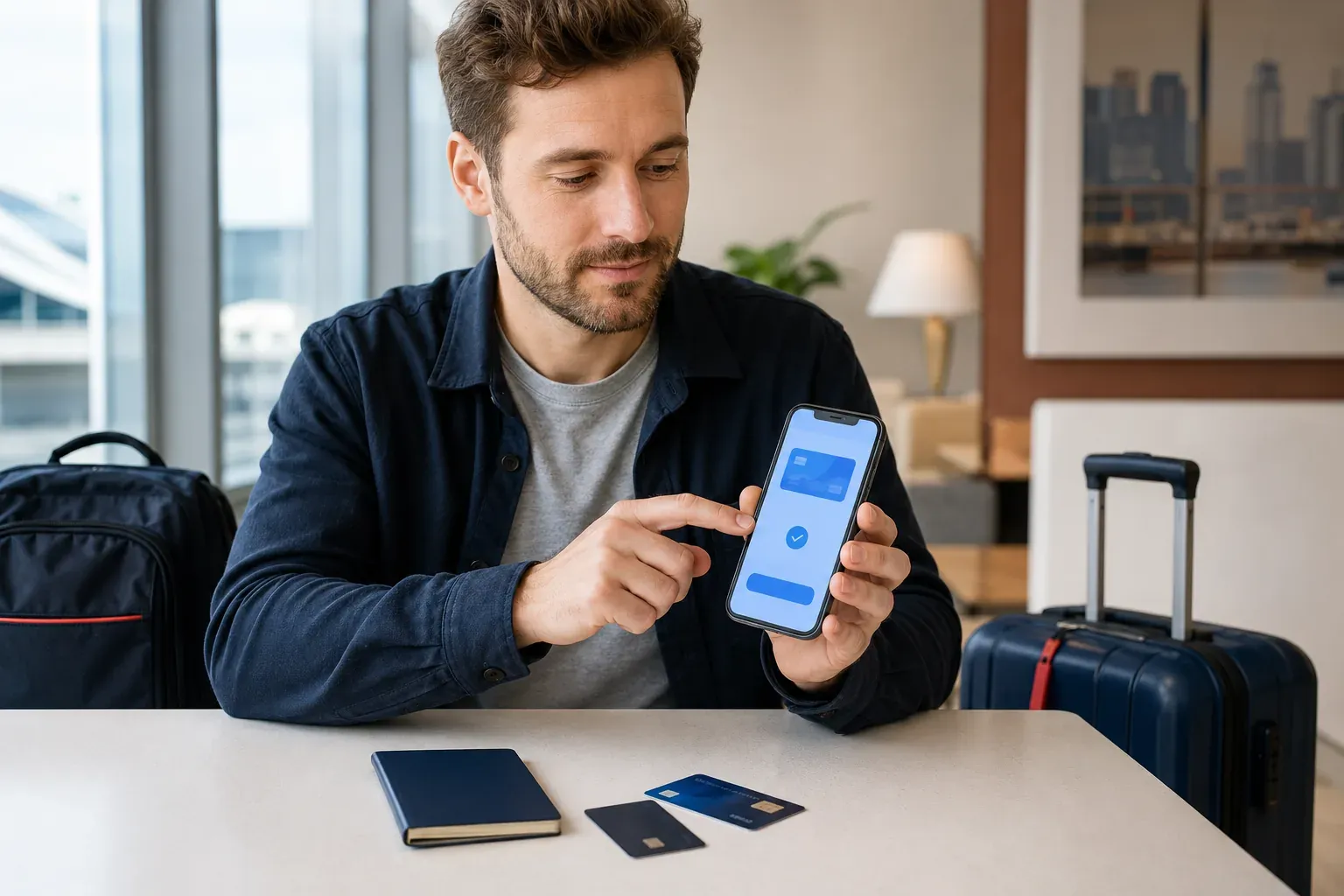
Yes, foreign visitors can use Alipay in China without opening a Chinese bank account. The usual setup is to register with an overseas mobile number, add an eligible international credit or debit card, and complete identity verification if the app requests it. Once the card is linked, you can pay participating merchants by scanning their Alipay code or showing your payment code to the cashier.
For most travelers, linking a card directly is the simplest option. Set it up before your flight, add a second card if possible, and keep some RMB cash as a backup. One important limitation is easy to miss: an overseas card linked to Alipay is intended for merchant purchases, not person-to-person transfers. That is why a payment can fail at a small vendor even when your card appears correctly in the app.
Last checked: July 13, 2026. Alipay menus, card eligibility, fees, limits, and verification prompts can change, so follow the wording shown in your app at the time of setup and payment.
Setup checklist
Alipay Setup in Six Steps
Set up Alipay before you travel so verification or card problems are easier to solve.
- Step 1Download and registerUse the official app and register with an international mobile number that can receive SMS codes.
- Step 2Choose your versionSelect International Version and English when those options are available.
- Step 3Verify your identityEnter your passport details and complete the requested document or face checks.
- Step 4Add an international cardFollow the on-screen card and issuing-bank verification process.
- Step 5Secure the accountCreate a separate payment password and enable biometric confirmation if appropriate.
- Step 6Prepare your backupsAdd a card from another issuer and keep mobile data and some RMB cash available.
What You Need Before You Start
Prepare these items while you are still at home:
- The official Alipay app from the Apple App Store or Google Play
- A mobile number that can receive international SMS codes
- Your passport
- An eligible overseas-issued credit or debit card
- Access to your bank app, email, or SMS for card verification
- Reliable internet access
- A second card and a small amount of RMB cash for backup
A Chinese phone number is not normally required for registration, and a Chinese bank account is not required for the basic visitor setup. Card acceptance still depends on Alipay, the card network, and your issuing bank.
How to Set Up Alipay with a Foreign Card
1. Download the Official Alipay App
Search for “Alipay” in your phone’s official app store and check the developer information before installing it. Avoid downloading installation files from unofficial websites or scanning random QR codes that promise a special tourist version.
Open the app and register with your real international mobile number. Keep access to that number during your trip because Alipay may use it for login or security checks. Alipay’s official guidance tells overseas travelers to register with a mobile number and then add an eligible international bank card.
2. Choose the International Version and English
After registration, look in the account or settings area for Switch Version, International Version, or similar wording. Then choose English under the language settings.
The exact path can change between app versions. Some mini programs inside Alipay may still display Chinese even when the main app is in English, so do not assume every service will be fully translated. Alipay describes its International Version as the version designed for overseas travelers visiting China.
3. Complete Identity Verification When Prompted
Alipay may ask for identity information during setup, when adding a card, when raising account limits, or before a particular payment. Follow the in-app instructions rather than assuming every account will see the same sequence.
You may be asked for:
- Your nationality or region
- Passport as the document type
- Your full legal name
- Passport number
- A clear photo of the passport information page
- A face scan or selfie check
Enter your name exactly as it appears on your passport. Avoid nicknames, shortened names, or guessing a different name order. Make sure the passport photo is sharp, all required edges are visible, and there is no glare.
4. Add Your International Credit or Debit Card
Open the bank-card section and select Add Card or the equivalent option. You will normally enter the card number, expiry date, security code, and any billing information requested on screen.
Alipay supports eligible overseas-issued cards from major international card networks. However, seeing your card network on a general support list does not guarantee that every card will bind successfully. Your issuer must approve the connection, and it may request a one-time password or an in-app confirmation. China’s official guide specifically warns that card binding must be approved by the issuing bank and that supported brands, limits, and fees can vary between payment products.
If possible, use a card with no foreign transaction fee. A travel card can reduce costs, but it is not automatically more reliable than a normal bank card. Reliability depends on the issuer’s fraud controls and whether it approves transactions in China.
5. Set a Secure Payment Password
Alipay may ask you to create a six-digit payment password. This is an Alipay security credential, not your card’s ATM PIN.
Do not use 123456, your birthday, or the same code you use to unlock your phone. Enable fingerprint or facial confirmation if the app offers it and you are comfortable using it.
6. Add a Backup Card and Check the Payment Screen
Add a second card from a different issuer if you have one. Two cards from the same bank can fail for the same reason, so different issuers are more useful than two versions of the same account.
Before your flight, confirm that:
- Both cards appear in Alipay
- You can open Scan
- You can open your Pay or payment-code screen
- You know how to change the selected card
- Your original mobile number can still receive security messages
You may not be able to complete a real in-store test outside the Chinese mainland, but you can make sure the account is ready and you know where the main controls are.
How to Pay with Alipay in China
There are two main in-person payment methods. Learn both because different merchants use different checkout systems. China’s official payment guidance describes the same two basic methods: scanning the merchant’s collection code or showing your own payment code.

Method 1: The Merchant Scans Your Payment Code
This is common at supermarkets, convenience stores, chain restaurants, malls, and other businesses with a cashier scanner.
- Open Alipay.
- Tap Pay, Pay/Receive, or the payment-code button shown in your version.
- Check which card is selected.
- Show the QR code or barcode to the cashier.
- Confirm the payment if Alipay asks for your password or biometric approval.
- Wait for the successful-payment screen before leaving.
Open the payment code only when you are ready to pay. Do not post it online or leave it visible longer than necessary.
Method 2: You Scan the Merchant’s QR Code
This is common at local restaurants, food stalls, independent shops, taxis, and counters with a printed code.
- Tap Scan in Alipay.
- Scan the merchant’s code.
- Check the merchant name if one is displayed.
- Enter the amount only if the merchant has not entered it for you.
- Recheck the decimal point and currency.
- Confirm the payment and show the success screen if requested.
Never type an amount from memory while distracted. Entering RMB 200 instead of RMB 20 is a simple but expensive mistake.
Foreign-card boundary
Overseas Cards Pay Merchants, Not People
A foreign card linked to Alipay is designed for eligible merchant purchases in the Chinese mainland. It cannot fund person-to-person transfers, red packets, or other financial services, so some personal collection QR codes may fail even when your card is linked.
- Ask the seller for a merchant Alipay code or let the seller scan your payment code.
- Try a backup card or another supported payment app.
- Keep a small amount of RMB cash for situations where the available code cannot accept an overseas card.
Paying Inside Alipay Services and Mini Programs
Alipay can also connect you to transport, ride-hailing, hotel booking, attraction tickets, translation, and other services. Availability and language support vary by city and provider. A linked foreign card may work for one service but not another, especially when a mini program has its own identity, phone-number, or payment requirements.
For buses and metros, use the dedicated Transport function or the city’s approved transit service. Your normal shopping payment code is not automatically a metro gate code. China’s official living guide instructs travelers to open Alipay’s Transport section, choose the city, and activate the relevant transit QR code.
Alipay Fees, Exchange Rates, and Limits
For payments funded by an international bank card, the commonly published rule is:
- RMB 200 or less in one transaction: no additional Alipay or WeChat service fee under the published visitor-payment guidance
- More than RMB 200 in one transaction: a 3% service fee may be charged on the full transaction amount
This distinction matters: the published government guidance says the transaction is free when it does not exceed RMB 200, while the 3% fee applies when it exceeds RMB 200. Always check the final payment screen because promotions, product rules, and account conditions can change.
Do not build your travel budget around repeatedly splitting one purchase into smaller payments. A merchant may refuse, and repeated attempts can create unnecessary payment problems.
Your card issuer can charge separately for foreign transactions or currency conversion. Alipay states that the exchange rate for an international-card transaction is provided by the card network and issuing bank, so check your card statement rather than assuming Alipay controls the final rate.
Pay in RMB when you are given a currency choice. Before traveling, check whether your card charges a foreign transaction fee and whether your bank requires a travel notice.
Why an Alipay Payment Can Fail Even When Your Card Is Linked
A linked card is only one part of the payment chain. The merchant, Alipay, the card network, and your bank all have to approve the transaction.
Use this order instead of repeatedly pressing the payment button.
1. Check the Payment Type
International cards linked to Alipay can fund daily merchant purchases in the Chinese mainland, but they do not support person-to-person transfers, red packets, or other financial services.
Some small vendors display a personal collection code rather than a merchant code. If Alipay treats the transaction as a personal transfer, your overseas card may not be available. Ask whether the seller has a merchant Alipay code, or let the seller scan your payment code instead.
2. Check the Selected Card
Alipay may default to a different card than the one you intended to use. Open the payment screen and switch cards before retrying.
3. Check Your Bank
Look for a fraud alert, one-time password, or declined-transaction notice from your issuer. Some banks block the first China transaction even though they allowed the card to be added to Alipay.
If the bank says it approved the transaction but Alipay still declines it, try the backup card rather than making many identical attempts. Official guidance recommends contacting either the payment provider or issuing bank when card binding or authorization fails.
4. Check the Amount and Fee Screen
A larger payment can trigger an Alipay service fee, a card limit, or extra bank verification. Read the confirmation page carefully before approving it.
For an expensive hotel, shopping, medical, or business payment, ask whether the merchant accepts your physical international card directly. That may be more suitable than routing a large transaction through a mobile wallet.
5. Use One Stable Internet Connection
Assume Alipay needs working internet. Avoid switching repeatedly between hotel Wi-Fi, mobile data, and a VPN during verification or checkout. A stable connection is more important than trying several networks at once.
6. Use Your Backup in a Clear Order
Try these alternatives:
- A second card in Alipay
- WeChat Pay with an eligible card
- A physical international card if the merchant accepts it
- RMB cash
- Another merchant or service channel
This is why the safest China payment setup is not “Alipay only.” Alipay should be your main tool, with at least one independent backup.
How to Contact Alipay Support
Alipay lists the following customer-service numbers for payment questions:
- From a Chinese number: 0571-2688 6000
- From an overseas number: +86 571 2688 6000
- Service hours: 08:00–24:00, China time, Monday to Sunday
You can also use the help or customer-service function inside the app. Have the transaction time, amount, merchant name, error message, and last four card digits ready. Never send your full card number, CVV, payment password, or SMS code to a stranger claiming to offer support.
My Recommended Alipay Setup for a China Trip
For a tourist, business traveler, Canton Fair visitor, or short-term guest, I recommend this setup:
- Alipay in International Version and English
- Passport verification completed if requested
- One main card with low or no foreign transaction fees
- One backup card from a different issuer
- WeChat Pay as a second mobile-payment option
- A small amount of RMB cash
- Reliable mobile data and a charged phone
Alipay is usually the easiest mobile-payment app for a foreign visitor to prepare first, but it should not be your only way to pay. The goal is not to imitate a local perfectly. The goal is to complete normal purchases without being stranded when one card, code, or network fails.
For a broader comparison, see the separate guide to Alipay vs WeChat Pay in China. You should also prepare reliable internet access in China and understand when cash still works in China.
Frequently Asked Questions
Can foreigners use Alipay without a Chinese bank account?
Yes. Foreign visitors can register and link an eligible overseas-issued bank card for merchant payments in the Chinese mainland.
Can I use Alipay with a foreign phone number?
Yes. Register with a supported international mobile number that can receive SMS verification codes. Keep access to that number during your trip.
Do I have to top up an Alipay balance?
Usually not. For the normal visitor setup, Alipay charges an eligible linked card directly when you pay a merchant. Prepaid tourist-card products are separate services and are not necessary for most travelers whose card links successfully.
Can I send money to a person with my foreign card?
No. Alipay’s official guidance says international cards cannot fund person-to-person transfers or red packets. Use them for eligible merchant purchases.
Why does a small shop’s QR code reject my card?
The code may be a personal collection code rather than a merchant-payment code. Ask for another Alipay payment method, try your payment code, or use a backup.
Is Alipay free for foreign-card payments?
Payments of RMB 200 or less are generally exempt from the additional app service fee under the published visitor-payment guidance. Payments above RMB 200 may carry a 3% fee on the full amount, and your card issuer may charge separate foreign transaction or exchange fees. Check the current confirmation page before paying.
Final Checklist Before You Fly
- Alipay downloaded from the official app store
- International Version and English selected if available
- International mobile number working
- Passport ready for verification
- Main card linked
- Backup card linked
- Payment password stored securely
- Scan and payment-code screens located
- Bank security alerts enabled
- Mobile data arranged
- Some RMB cash prepared
Once these are ready, you can handle most everyday merchant payments in China with much less stress.
